Where You Belong
Building Context for Relationships
Part One of Two
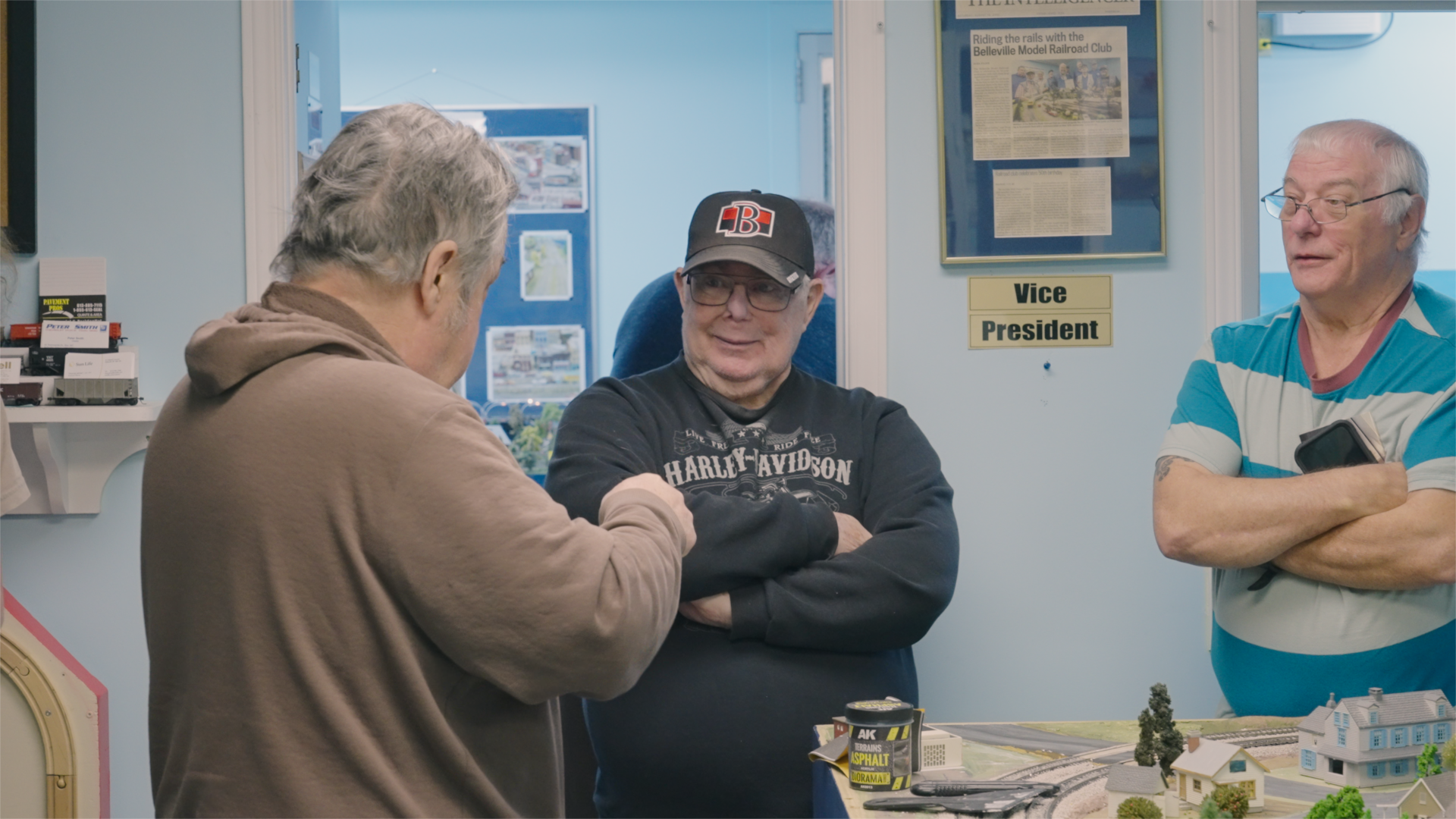
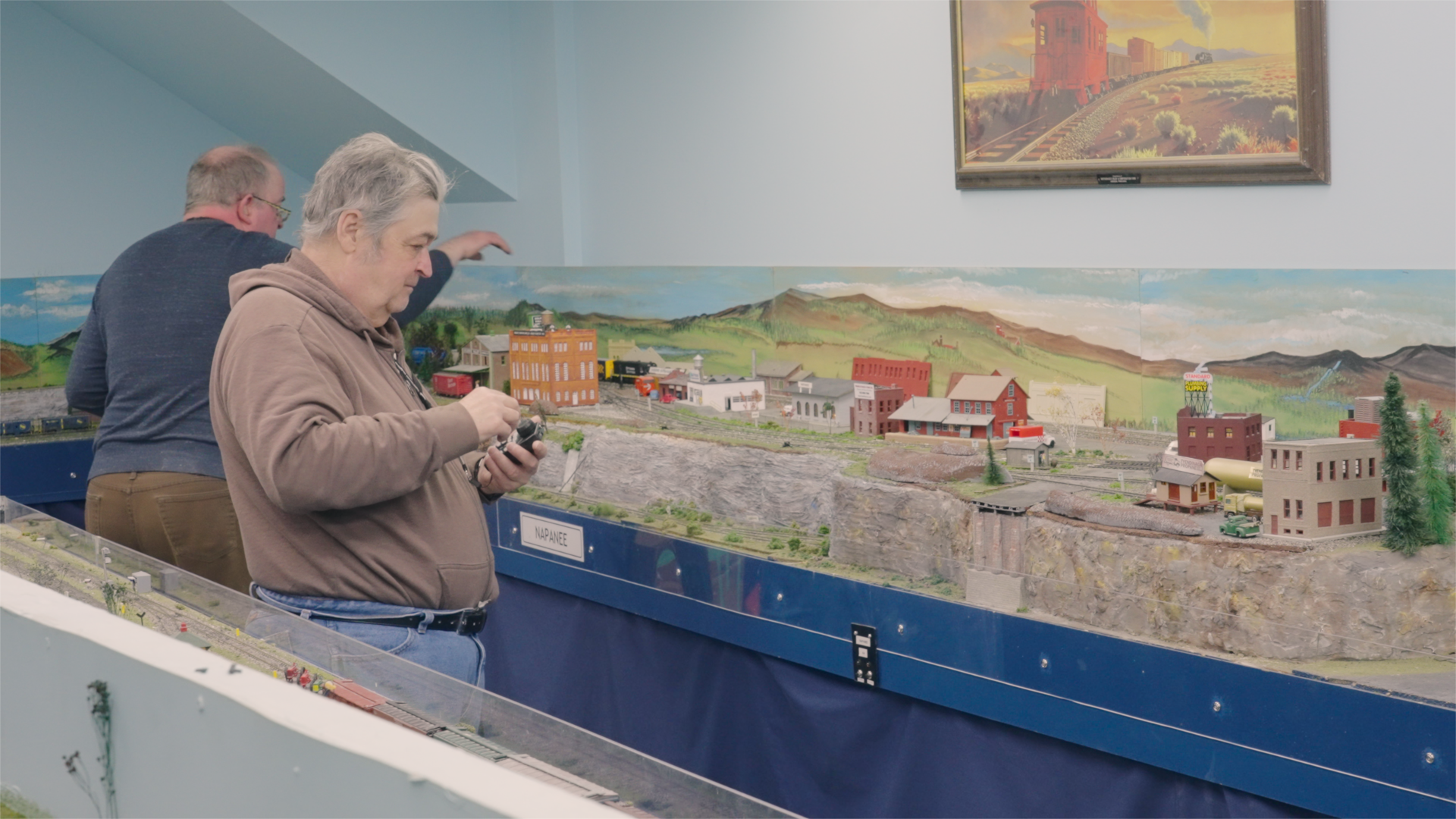
Every Tuesday evening, Brian makes his way to the Belleville Model Railroad Club. He knows where to go. He knows the people there. And when he walks in the door, they know him. That kind of belonging does not happen by accident.
For CVNQuinte, it is the result of deliberate, thoughtful work that is grounded in a framework called Building Context for Relationship, developed by respected expert Janet Klees. Understanding how that framework shapes the agency’s approach helps explain what makes Brian’s Tuesday nights, and his Sunday mornings at church, deeply impactful.
The Two Hardest Things
Terri Korkush, Executive Director of CVNQuinte, describes the challenge plainly. For people with intellectual disabilities, two outcomes consistently prove the hardest to achieve: friendship and purpose.
“Often the two outcomes that are really difficult for people with intellectual disabilities to achieve,” she says, “is the ability to have as many friends as they want in their life and as many social roles as they desire in their life. And often they don’t know what that even could look like.”
That gap is what Building Context for Relationship, developed by Janet Klees, is designed to address. Terri explains how her team uses it: “We look at the interests of the person. We help figure out the places where those interests can flourish, and make sure that they get to those places on a frequent and regular basis.”
“So once they get established in those locations,” she continues, “then the opportunity is for our community support workers to help them figure out what role can you play here? How can you contribute? And, usually based on their contribution, they start to build friendships as well.”
The work, she emphasizes, is not simply logistical.
“Their goal is not just to take somebody someplace,” Terri insists, “but their objective is to help that person interject themselves into the space, look for the role that they can play, how they can contribute, how they can really enjoy the environment with the people.”
She offers a concrete example: “Success is not just going to church. It’s actually spending time talking to people at church before and after the sermons, and building those relationships up, and looking at places where they can contribute in those church environments.”
There is another dimension to this that Terri thinks about carefully. People supported by CVNQuinte sometimes do not have the opportunity to develop a concept of how to give as well as receive.
“The people we support don’t always get taught at a younger age how they can give back, how they can contribute. They’re often taught that they’re the people who are the receivers of good deeds, or help.” Terri ponders, “How do we teach them how to give back? And if they don’t know how to do that, that limits their ability to know how to be a good friend or how to be a good volunteer in a space, or contribute as a teammate or a club member.”
Brian’s story is a living answer to that question.
A Life Built Around What He Loves
Brian is a Deaf and uses American Sign Language as his primary mode of communication. He loves trains. He loves his faith community. In both places, he is not a newcomer — he is a known and valued member.
His connection to trains goes back long before his current support team. Sam Thrasher, a support worker who has been with Brian for six or seven years, is quick to say she came along well after the trains did.
“His love for trains goes back probably 15 or 20 years. Certainly way before my time,” she says. “He had his own model train setup at home but he really doesn’t have the ideal space for it.”
When Brian’s apartment could no longer fit a layout, his Coordinator looked into what might work. That search led to the Belleville Model Railroad Club and, ultimately, a Tuesday night routine that has become one of the most meaningful parts of Brian’s week.
The Club: A Place That Fits
Doug Green is the Treasurer and enthusiastic ambassador of the Belleville Model Railroad Club. He is also a man who thinks carefully about what a club is really for.
New members are welcomed with a simple, low-pressure invitation: come in, have a look, get a little history. If you like it, come back for four more weeks. If you still like it, consider joining. “No pressure,” Doug says. “This has to fit you and your life and your needs, not ours.”
What the club offers, he explains, is something more than a shared hobby. It is a space where people figure things out together, make mistakes without judgment, and build something from nothing.
Brian communicates differently than most club members. There is a language gap. But Doug describes what has grown over time with characteristic simplicity.
“We have limited hand signals, but Brian always has a big smile and gives the thumbs up,” says Doug. “When he’s got the throttle in his hand, his train’s running, this is the best night of the week for him.”
The club has grown in recent years, Doug notes, largely through people who walked in knowing nothing about model trains. And Brian fits that spirit exactly.
“Then all of a sudden they become a member, and then they buy a locomotive, and then they’re running a train like Brian, with the same smile on their face.”
The Art of Stepping Back
When Sam first started bringing Brian to the club, there was a natural awkwardness. Club members would wave, but they tended to speak to Sam rather than Brian. The language barrier made direct connection feel uncertain.
Sam’s response was deliberate. She began moving herself out into the hallway, keeping watch at more of a distance. Over a number of weeks, she watched something shift.
“I noticed that while I was standing out here, they just started interacting with him and doing the signs. At this point, I’m almost a glorified chauffeur. For the most part, he’s in there by himself. He’s doing what he needs to do, and he’s having a fun time.”
That shift is exactly what the work is meant to produce, Sam says. Finding a place where Brian had a genuine shared interest with similarly-aged people. He’s found a place where connection grows on its own terms and is not incidental to the support. That is the point.
Now, when Brian arrives on a Tuesday, Andrew, one of the regulars, gets him set up with his own throttle. When Brian leaves, he says goodbye to everyone. Everyone says goodbye back.
“They look forward to seeing him,” Sam says. “They’re really happy.”
Sunday Morning, and a Community That Was Waiting
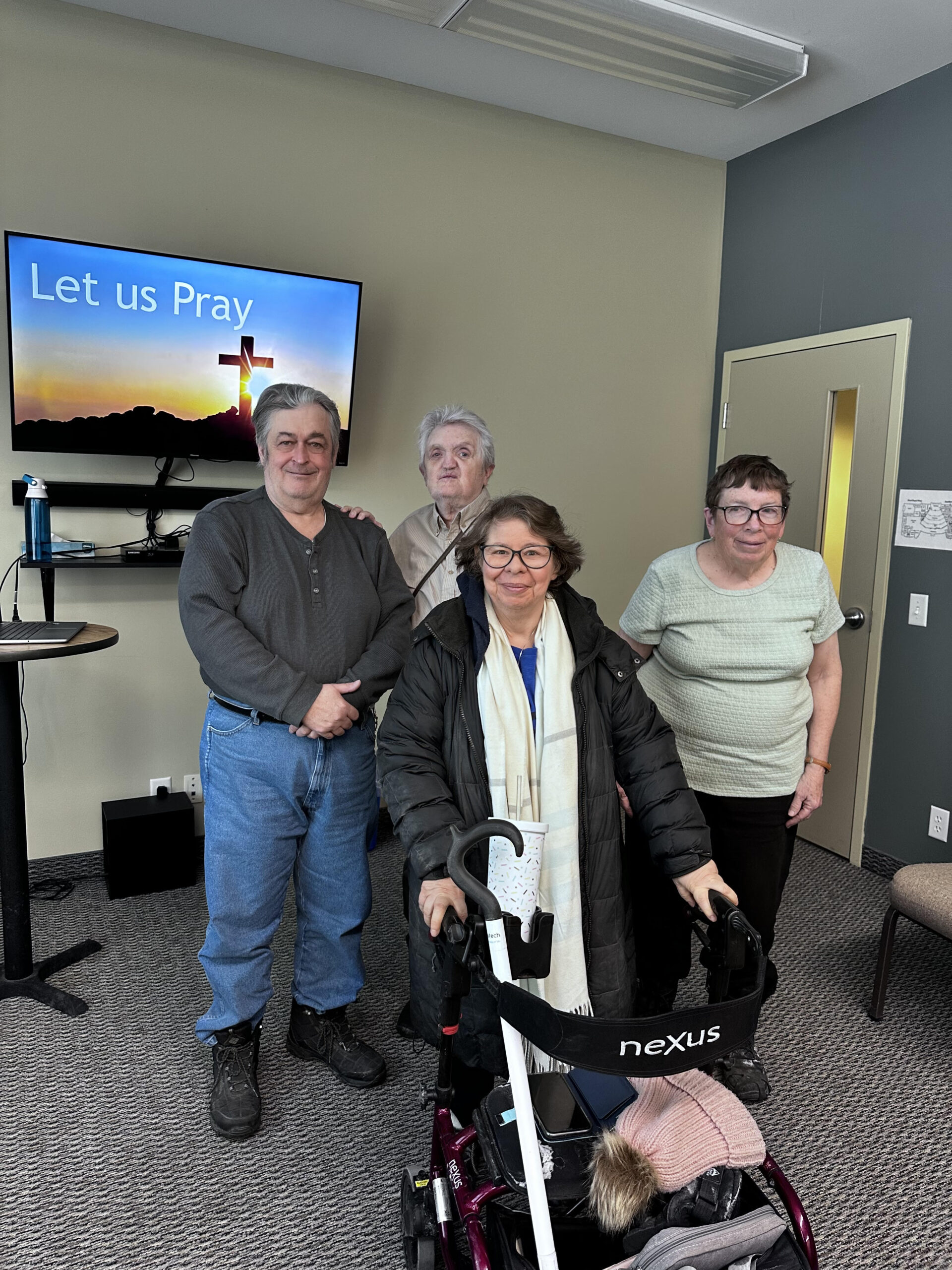
Trains are one part of Brian’s life. Church is another. On Sundays, Amarjit Dhaliwal, a Community Support Worker with CVNQuinte, supports Brian in staying connected to his community at Maranatha Church in Bellevile. It’s a role that, by Amarjit’s own telling, requires very little intervention.
He remembers his first Sunday clearly: “Literally everybody that I saw in that room was so excited to see him back. He’s like a missing piece of the puzzle. He’s greeting everybody, everybody is greeting him. I was very shocked, and I was very happy. I thought, ‘I don’t think he needs me. I think I need to learn from him, because he builds a relationship very easily.’ And I think people love him there.”
Amarjit’s support is real but light: a ride to and from church, help navigating activities, a word with the pastor if Brian needs anything. For the rest, Brian handles himself.
What Amarjit describes in Brian’s church life goes beyond attendance. Before the service begins, the pastor invites people to share what is on their hearts. Brian participates in that fully.
“He is the one who stayed in between, in the middle of the people. And in sign language, they share their stories, they share their sorrows, they share their grief. And he’s the one who listens to everybody and he prays for them. I believe it would be about 9 to 10 people in the room, and he listened to every one of them. I think this is a true example of being human.”
“He’s very respectful,” says Amarjit. “And obviously respect is not given — it’s earned. And he earned it.”
“He is the one who stayed in between, in the middle of the people. And in sign language, they share their stories, they share their sorrows, they share their grief. And he’s the one who listens to everybody and he prays for them. I believe it would be about 9 to 10 people in the room, and he listened to every one of them. I think this is a true example of being human.”
Building a Context, One Day at a Time
What makes Brian’s story possible is not one service or one worker. It is the accumulation of careful attention: a Coordinator who once looked up a railroad club, a Community Support worker who learned to step back, another who shows up on Sundays. And they are all working from the same conviction that Brian has something to contribute, not just to receive. Offered throughTerri in her oversight role, the ideas of Janet Klees are changing lives in our local community all the time:
On Tuesday nights, Brian runs his train. On Sunday mornings, he prays for the people around him. In both places, people are glad he is there. CVNQuinte workers constantly watching for the support he needs to expand his relationships and his roles in his community.
That, at CVNQuinte, is the work.
***
Read Part Two of this series: Measuring What Matters: Personal Outcome Measures at CVNQuinte